

One of the most common tax headaches we see is not aggressive deductions or complicated investments. It is forgotten income.
The IRS has become very efficient at matching the income reported to them with what shows up on your tax return. When something does not line up, you may receive a notice in the mail. These are often called correspondence audits, and while they are usually fixable, they can take months to resolve.
The good news is that most of these issues are preventable.
Let’s walk through the most common, easy-to-miss income sources and how to stay ahead of them.
Why the IRS Catches Overlooked Income So Easily
When a company issues you a Form W-2, 1099-NEC, 1099-K, 1099-INT, or another information return, they send a copy to you and to the IRS.
The IRS runs automated matching programs that compare what third parties report with what you report on your tax return. If income appears in their system but not on your return, a notice is generated.
You can review different types of information returns directly on the IRS website to see how they work and when they are issued.
Outbound link idea:
- IRS forms and instructions page
- IRS information return matching explanation
Now let’s talk about the income sources people most often forget.
1. Side Gigs and Freelance Work
Side work often feels casual. Maybe you helped a friend with consulting. Maybe you picked up a few design projects. Maybe you drove for a rideshare company for a few months.
If you were paid, it is usually taxable income.
This includes:
- 1099 contractor income
- Rideshare driving
- Delivery apps
- Freelance services
- Consulting
- Cash payments
Even if you do not receive a 1099 form, the income may still be taxable. The form is just a reporting tool. The tax obligation exists regardless.
The upside is that side gig income often comes with deductible business expenses. Mileage, supplies, software subscriptions, and home office expenses can offset income when tracked properly.
Inbound link idea:
- Guide to Schedule C and self-employment taxes
- Blog post about business expense deductions
Check out our Year-End Tax Checklist to ensure you don’t miss anything.
2. Selling Items Online
Online platforms like eBay, Facebook Marketplace, Etsy, and similar apps have made selling simple. But tax rules still apply.
If you sell personal items at a loss, there is generally no taxable gain. However, if you consistently sell items for a profit, the IRS may consider that business income.
Additionally, certain platforms issue Form 1099-K once you cross specific thresholds. That means the IRS already knows about the activity.
If your online selling activity becomes regular or profitable, it may be time to formalize your recordkeeping.
3. Interest, Bonuses, and App Payments
Small amounts add up.
Interest from bank accounts generates Form 1099 INT.
Brokerage accounts issue 1099-DIV and 1099-B.
Savings apps may issue bonuses.
Crypto platforms issue reporting forms.
These are easy to forget, especially when amounts are small. But the IRS computer does not forget.
Before filing, review:
- Bank accounts
- Brokerage statements
- Crypto wallets and exchanges
- Payment apps
Inbound link idea:
- Crypto tax reporting guide
- Investment income tax basics
4. Refunds and Reimbursements
Money coming back to you often feels like nothing happened.
But not all refunds are treated the same way for tax purposes.
For example:
- State tax refunds can be taxable, depending on whether you itemize deductions
- Business reimbursements may need to be classified properly
- Health insurance premium refunds may have reporting consequences
A simple note about what the payment represents can prevent confusion later.
5. Insurance Payouts and Legal Settlements
Insurance proceeds are not automatically tax-free.
It depends on what the payment replaces.
Examples:
- Property damage reimbursements may reduce the basis in property
- Lost wage payments are often taxable
- Emotional distress or medical reimbursements have specific rules
The tax treatment depends on the nature of the claim. Always review the documentation before assuming it is not taxable.
6. Unemployment Compensation
Unemployment income is taxable under current law.
During certain years, temporary exclusions applied, which created confusion. That is no longer the case.
If you received unemployment benefits, you should receive Form 1099 G. Make sure it matches your records before filing.
What You Can Do to Avoid an IRS Notice
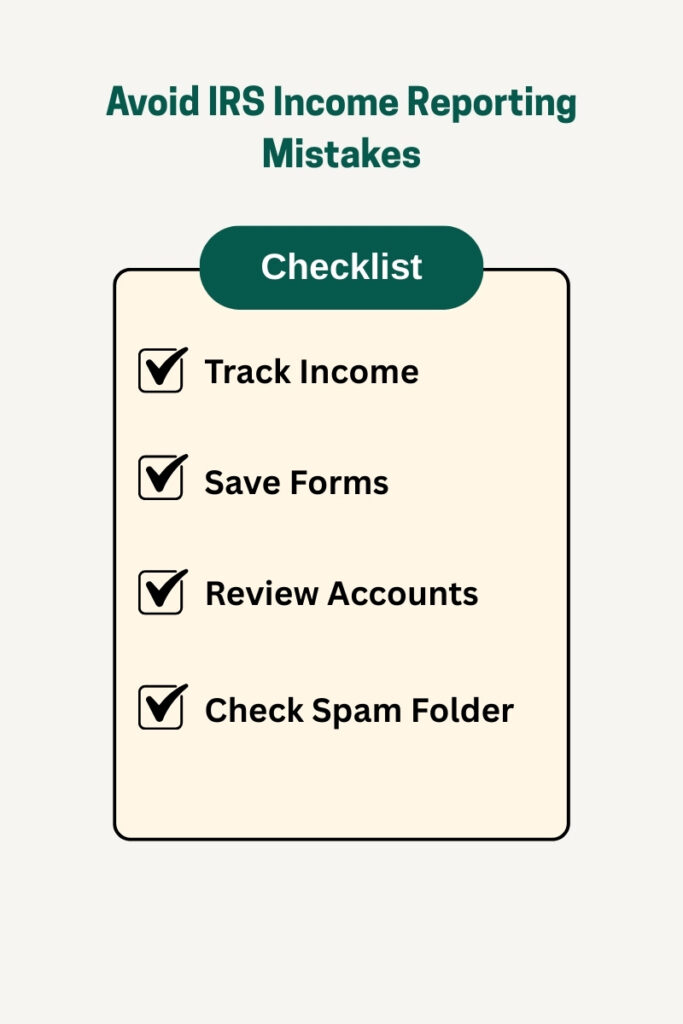
Avoiding tax headaches is often about habits, not complexity.
Keep a Running Income List
When money comes in from outside your regular paycheck, write it down. A simple spreadsheet or phone note works.
Tracking as you go eliminates year-end guesswork.
Save Tax Forms Immediately
As soon as you receive a W-2, 1099, or other tax form, store it in one location. Digital folders work well.
Missing forms are one of the biggest causes of delayed returns and IRS notices.
Check Spam and Junk Folders
Many companies now issue 1099 forms electronically. If the email is flagged as spam, you may never see it.
If you are expecting a form, actively check those folders.
Review Accounts Before Filing
Before finalizing your return, scan:
- Bank accounts
- Payment apps
- Online platforms
- Investment accounts
Look for deposits that may not have generated a formal tax form but still represent income.
This five-minute review can save months of back and forth with the IRS.
Why This Matters for Tax Strategy
From a strategy standpoint, reporting income accurately does more than avoid notices.
It allows you to:
- Offset income with proper deductions
- Avoid penalties and interest
- Plan estimated tax payments correctly
- Keep clean records in case of an audit
Unreported income creates unnecessary risk. Organized income creates planning opportunities.
Inbound link idea:
- Estimated tax payment guide
- Tax planning strategy page
- Year-end tax checklist blog
Final Thoughts
The IRS is very good at matching income forms to tax returns. Most correspondence audits happen because something was overlooked, not because someone tried to game the system.
Side gigs, small interest payments, online sales, unemployment, and insurance payouts are the most common culprits.
The solution is simple but powerful. Track income as it comes in. Store documents in one place. Review accounts before filing.
If you want help building a system that keeps you organized and audit-ready, our strategy team at Bement Company can help you structure it correctly from the start.