
Property taxes are rising across much of the U.S., leaving many homeowners wondering how their tax bills keep going up even when their home’s value seems unchanged.
The truth is, your property tax bill is driven by two main factors: your assessed home value and your local tax rate. Both can fluctuate for reasons that have little to do with your actual home.
We’ll explain what determines your property taxes, how to challenge an unfair assessment, and what strategies can help you reduce your bill next year.
What Determines Your Property Taxes
Most local governments calculate property taxes using two key numbers:
- Assessed Value: This is the dollar value your local assessor assigns to your property, based on factors like square footage, location, and comparable home sales.
- Local Tax Rate: This is set by taxing authorities such as your county, city, school district, and fire department.
Even if your home’s value stays the same, your tax bill can increase if any of those local agencies raise their rates.
For more information on Property Taxes, visit the Tax Foundation’s page.
Why This Matters
Unlike income or sales taxes, property taxes are highly local, and they can vary dramatically from one neighborhood to the next. Two identical homes, just a few streets apart, can have very different tax bills depending on the local mill rate or assessment practices.
Understanding how your property is valued and taxed gives you the power to question and even lower your bill.
How to Lower Your Property Tax Bill
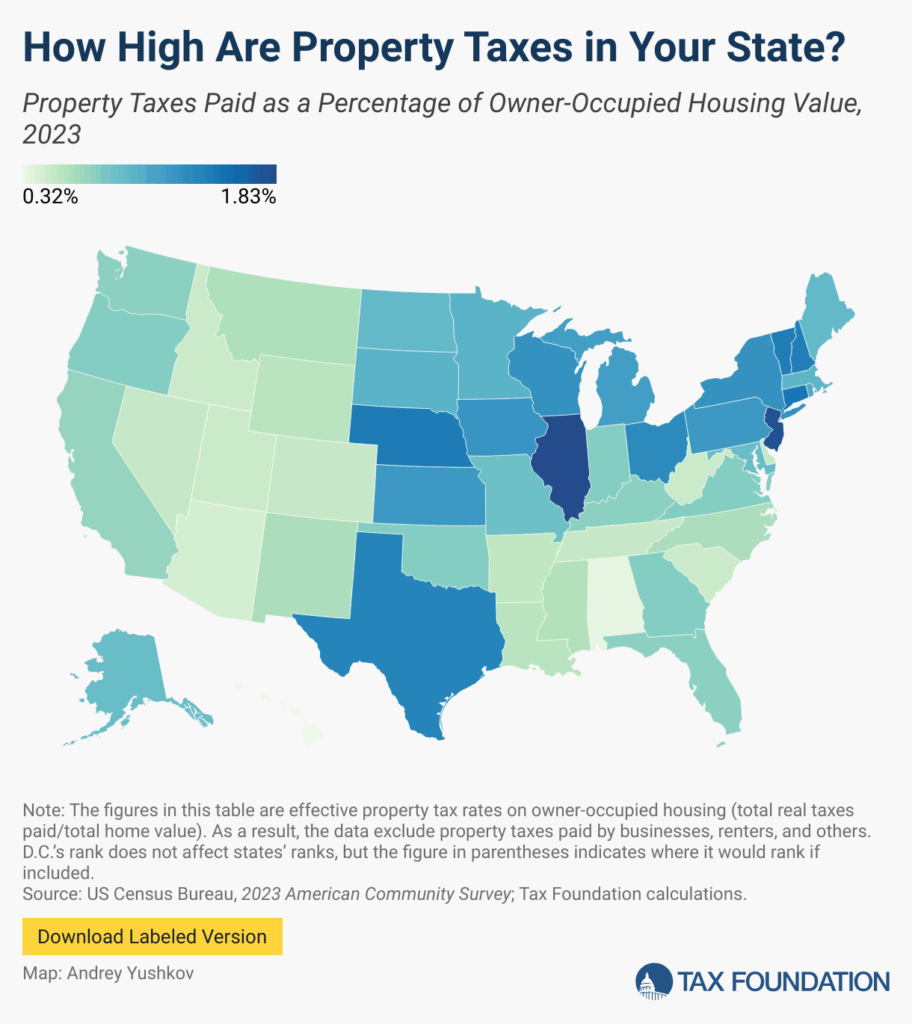
For the Full interactive map, click here
1. Know the Assessment Calendar
Every city or county has its own schedule for assessment appeals. Missing a deadline can mean waiting an entire year for another chance.
Find out:
- When your area conducts property assessments
- The appeal submission deadline
- Whether online appeals are accepted
Mark these dates early. If you plan to challenge your property’s value, timing is everything.
Check your local assessor’s website or start at the National Association of Assessing Officers Directory
2. Challenge Your Property’s Assessed Value
If you believe your property is overvalued, you can file an appeal with your local assessor’s office.
Here’s how to strengthen your case:
- Gather comparable sales data: Look at similar nearby homes that sold for less.
- Document your home’s condition: Older systems or deferred maintenance can justify a lower value.
- Be factual, not emotional: Assessors respond to data, not complaints.
Most appeals are reviewed within a few weeks, and successful appeals can lower your taxes for years to come.
3. Claim All Eligible Exemptions
Many homeowners miss out on savings because they don’t apply for exemptions.
Common examples include:
- Homestead exemption: For primary residences.
- Senior or veteran exemptions: For qualifying individuals.
- Disability or low-income exemptions: Based on specific income or health criteria.
- Historic district or disaster recovery exemptions: In designated areas.
4. Compare Local Tax Rates Before Buying or Moving
Before buying a home or relocating, research how property taxes are structured in different neighborhoods.
Even small differences in tax rates can cost you thousands over time. Look up:
- The current mill rate (tax per $1,000 of assessed value)
- Average annual rate increases in recent years
- Planned local levies or bond measures that could raise rates
Use tools like a Property Tax Calculator to estimate your annual cost before purchasing
5. Understand the Tax Impact of Renovations
Upgrading your home can increase its value and your taxes.
Counties often reassess properties after permits are pulled for major work, such as:
- Building an addition
- Installing a pool or deck
- Major kitchen or bathroom remodels
Before starting, ask your local building department if the project will trigger a reassessment. Sometimes, minor or non-permitted updates may not.
6. Review Your Land Value
Property taxes cover land plus improvements (your home and structures). If a portion of your land is unusable, such as wetlands, steep slopes, or areas under easement, you might qualify for a reduction.
Ask your assessor if adjustments are available for limited-use land or non-buildable sections.
Final Thoughts
Property taxes are one of the few taxes you can actually challenge. But doing so requires knowing how your local system works and when to act.
Listen to our podcast episode for other ways to write off expenses for your home
Schedule a Consultation
If you believe your property is over-assessed or you’re unsure how to approach the process, schedule a consultation with Bement Company to review your taxes and uncover other tax-saving opportunities.