

The home office deduction is one of the most misunderstood tax benefits. Many people avoid it out of fear of an IRS audit, but the truth is, this deduction is completely legitimate when taken correctly.
In this post, I will explain what the home office deduction is, who qualifies, how to calculate it, and how to avoid common mistakes that raise red flags with the IRS.
Why Does the Home Office Deduction Exist?
Running a business from home costs money. The IRS recognizes this and allows business owners to deduct part of those expenses. If you use a portion of your home exclusively for business, you may be able to deduct a portion of your rent, utilities, and even maintenance costs.
The deduction exists to level the playing field for business owners who do not operate out of traditional office space. But there are rules, and following them is key.
Who Qualifies for the Home Office Deduction?
The deduction is not just for remote consultants or Zoom warriors. Anyone can qualify if they meet two key requirements:
1. Exclusive and Regular Use
Your home office must be used only for business. That means no kids doing homework in the space, no guest bed in the corner, and no gym equipment doubling as office furniture.
2. Principal Place of Business
Your home office must be the main place where you do business. If you see clients, meet prospects, or do significant work at home, you likely qualify. Even if you rent external office space but rarely use it, your home office may still be deductible.
If you meet these criteria, congratulations. You qualify.
How Much Can You Deduct?
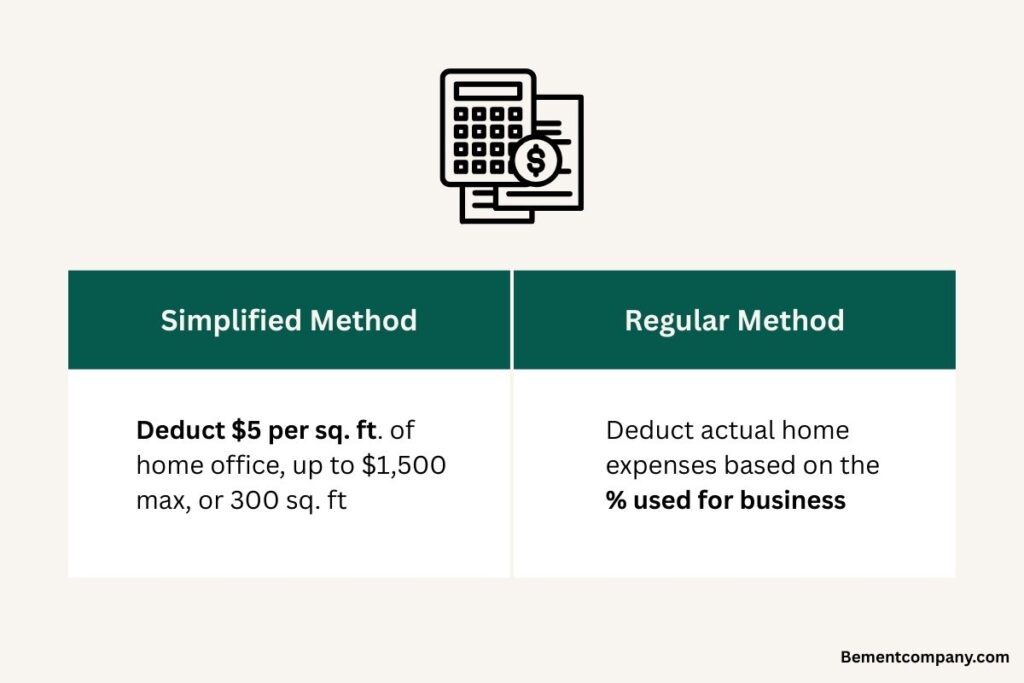
There are two main methods:
The Simplified Method
Deduct $5 per square foot of your home office, up to 300 square feet. This is fast and easy.
The Actual Expense Method
Calculate the percentage of your home used for business and apply that percentage to expenses like rent, mortgage interest, utilities, and repairs. This often provides larger savings for high-income earners but requires more bookkeeping.
For more information on both methods, you can visit the IRS’s website
The S-Corp Twist: How Home Office Deductions Work for S-Corp Owners
If you own an S-Corp, the deduction works differently. You cannot claim it directly on your personal return, but you can be reimbursed by your business.
Here is how to set it up properly:
- Set up an accountable plan so your S-Corp can reimburse you for business expenses.
- Calculate your home office expenses using the actual expense method.
Submit a monthly reimbursement request and have your S-Corp write you a check.
The reimbursement is tax-free to you and a deductible expense for the business. This keeps things clean and avoids IRS scrutiny while still giving you the benefit.
Where People Get Into Trouble
Many IRS red flags come from misuse of the deduction:
- Using non-exclusive space, such as a dining room or living room.
- Claiming an unrealistic percentage of your home as office space.
- Mixing personal and business expenses, like deducting your entire utility bill.
To stay safe, measure your office space, keep detailed records, and if necessary, take photos of your office setup.
The Right Way to Take the Home Office Deduction
Follow these steps to claim the deduction correctly:
- Be reasonable. Deduct only what is fair.
- Keep records. Save receipts, track expenses, and document your office use.
- Use the right method. Sole proprietors report on Schedule C, while S-Corp owners should use an accountable plan.
- Work with a professional. A CPA can ensure you maximize benefits without triggering an audit.
👉🏻 Click this link for our free tax worksheets, including the business use of home
Why You Should Not Skip This Deduction
The home office deduction is not a loophole. It is a legitimate tax benefit designed for business owners. Taken correctly, it can save thousands every year.
For example, I deducted $5,000 of home office expenses last year. That translated into $1,200 of tax savings.
Do not leave money on the table. If you qualify, claim the deduction, do it correctly, and keep more of your money where it belongs: in your pocket, not the IRS’s.
Use our Tax Savings Calculator to see how much you can save