
Recently, I have had several conversations with clients who were frustrated by two issues: owing money on their tax return and being penalized.
And the only thing worse than a surprise tax bill is a surprise penalty.
That is where quarterly estimated tax payments come in. For many high earners, self-employed professionals, and investors, this is an essential part of tax planning.
But for most people, it’s a mystery, even for those who make the payments every year.
So today, let’s break it down step by step.
What Are Quarterly Estimated Tax Payments
The IRS wants you to collect taxes throughout the year, not just when you file in April. If your employer doesn’t withhold enough taxes from your paycheck, or if you earn income that’s not subject to withholding, you are expected to make quarterly tax payments.
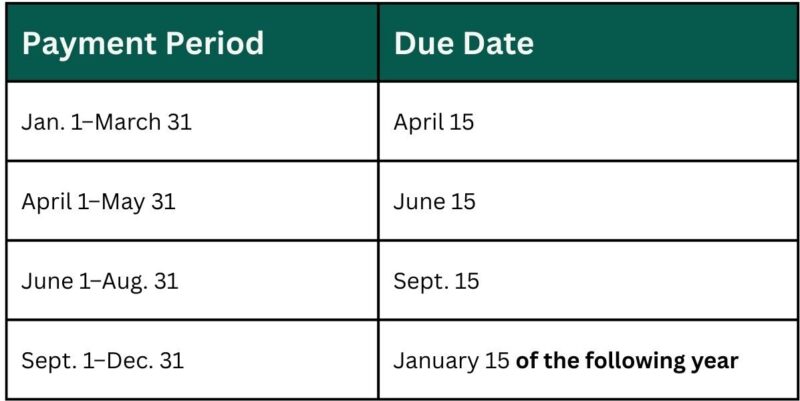
These payments are essentially prepayments of your expected annual tax bill. They are due in April, June, September, and January of the following year.
IRS guidance on estimated taxes
Who Needs to Make Quarterly Tax Payments?
If you’re self-employed, a business owner, an investor, or a high-earning sales professional with commission income, you likely need to make estimated payments.
The general rule: If you expect to owe more than $1,000 in taxes after subtracting withholding and credits, the IRS expects you to pay quarterly.
What Happens If You Don’t Pay Enough?
If you underpay throughout the year, the IRS may charge:
- An underpayment penalty, even if you pay your full bill at filling
- Interest on unpaid balances, which continues until the tax is fully paid
In short, waiting until April to pay can cost you extra.
How to Calculate Quarterly Estimated Payments
The general rule is to divide last year’s total tax liability by four. That gives you a ballpark figure.
But if your income fluctuates, this method may not be enough. You might need to adjust as you go.
Working with a tax professional (or reliable tax software) can help ensure accuracy.
Safe Harbor Payments vs. Actual Estimated Payments
The IRS offers a safe harbor rule to protect taxpayers:
- Pay at least 100% of last year’s tax liability, or
- Pay 110% if your adjusted gross income was more than $150,000.
Meet this rule, and you avoid penalties, even if you owe more at filing. On the other hand, actual estimated payments are based on your current year’s income. This can prevent overpaying, but it requires precision. If your income spikes and you have underpaid, penalties may apply.
What if You Overpay?
If you overpay, the IRS will refund you after you file. But you will not earn interest. In effect, you are giving the government a free loan.
That’s why it’s important to calculate as accurately as possible and not simply round up.
How to Make Payments
The easiest way is online through IRS Direct Pay. You can also pay via debit card, credit card, or check, though fees may apply.
Mark these dates in your calendar. The IRS does not give grace periods.
Final Thoughts
Paying quarterly estimated taxes is not just about avoiding penalties. IT’s about keeping your cash flow smooth, avoiding surprises, and staying strategic.
If you need help calculating your payments or creating a tax planning strategy, schedule a consultation with Bement Company.